Japanese · English · C1–C2
Advanced Japanese stories, with the English alongside (C1–C2)
Poe, Bierce, Hawthorne, Melville and Twain in Japanese: dense, stylish prose, with the English original there for the sentences worth a second look.
34 advanced stories in Japanese, 27 of them free
Each one opens in your browser with no account, the Japanese and the English side by side, paragraph by paragraph, shortest first. Every free story is also a free Japanese–English ebook for Kindle, Kobo or any e-reader: downloading needs a free account, no payment (which file to pick).
Besides the classics, this level has stories from 夜のパン屋, original Japanese stories written for the library.
Open the advanced Japanese–English stories in the library, where you can search them and switch to another level or pair.
To listen as you read, see the Japanese stories with audio.
 47C1
模型
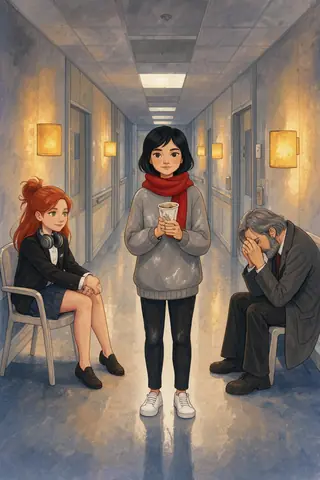 41C1
廊下
 42C1
四枚の紙
 49C1
段差を越えて
 C1
楕円形の肖像画
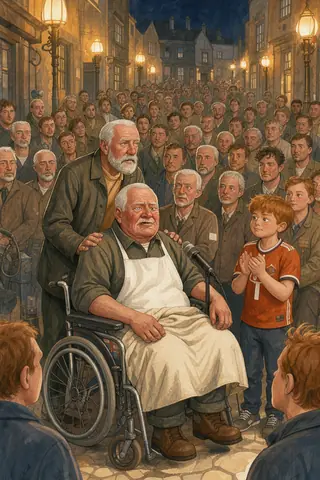 48C1
タウンホール
 43C1
言葉がない
 44C1
二人のパン屋
 46C1
一晩に十二周
 45C1
カウンターの向こうで
 50C1
我が家
 C2
カラベラス郡の名高き跳び蛙
 C1
赤死病の仮面
 C1
足のあるサメ
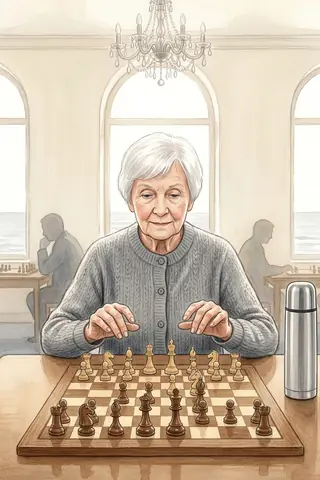 C1
静粛に
 C1
石の花嫁
 C1
ウンテルドルフの声
 C1
告げ口心臓
 C1
サン・グレゴリオの眠り人
 C1
森の眠り姫
 C1
商会の口
 C1
トバモリー
 C1
ワインは酸っぱい
 C1
黒猫
 C1
アウル・クリーク橋の一大事
 C1
曲がる名、屈する名
 C1
ハイデッガー博士の実験
 C1
アメリカへの一語
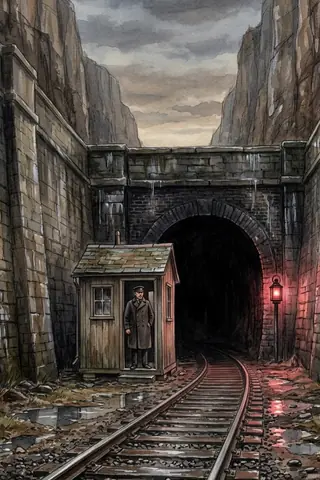 C1
信号手
 C1
アモンティリャードの酒樽
 C1
スリーピー・ホロウの伝説
 C1
緋色の疫病
 C1
黄色い壁紙
 C2
書記バートルビー
What advanced Japanese stories are like
Advanced stories are dense on purpose: Poe’s narrators circle their own guilt, Bierce bends time, Melville’s Bartleby prefers not to. The Japanese carries that style with long sentences, rare words and a literary register.
At this level you rarely need the English for the plot. It is there for the phrases that are hard to pin down, and for comparing how the same effect is achieved in two languages.
How to read Japanese at C1–C2
Read the Japanese as literature
Read at your normal pace and let unfamiliar words go when the meaning is clear. Stop only where the style or a turn of phrase interests you.
Use the English for nuance
When a word could mean two things, the English shows which one the story needs. That is where advanced readers still learn the most.
Read aloud
Literary Japanese has rhythm. Reading a paragraph aloud, then checking its English, trains your ear as well as your eye.
More on the method in how to read a parallel text.