Andrew Lang
Ali Baba and the Forty Thieves
Ali Babá e os Quarenta Ladrões
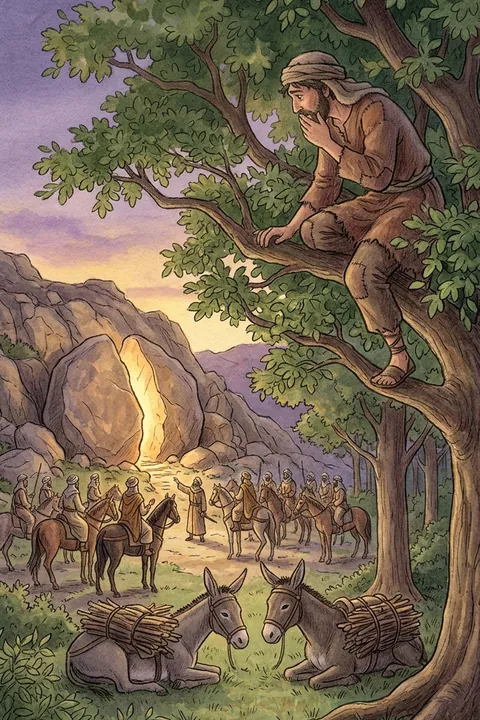
Um pobre lenhador se esconde em uma árvore e ouve quarenta ladrões abrirem sua caverna secreta com as palavras “Abre-te, Sésamo!” Ele pega um pouco do ouro deles, e logo o capitão dos ladrões sai para procurar o homem que conhece o segredo deles.
B225 minÁudio
Como começa
In a town in Persia there lived two brothers, one named Cassim, the other Ali Baba. Cassim was married to a rich wife and lived in comfort, while Ali Baba had to support his wife and children by cutting wood in a nearby forest and selling it in town. One day, when Ali Baba was in the forest, he saw a group of men on horseback coming toward him in a cloud of dust. He was afraid they were robbers, and he climbed into a tree to hide. When the men came up and got off their horses, he counted forty of them. They took the bridles off their horses and tied them to trees. The finest-looking man among them, whom Ali Baba took to be their captain, went a little way into some bushes and said, "Open, Sesame!" so clearly that Ali Baba heard him. A door opened in the rocks, and after the captain had made the group go in, he followed them, and the door shut again by itself. They stayed inside for some time, and Ali Baba, afraid they might come out and catch him, had to sit patiently in the tree. At last the door opened again, and the Forty Thieves came out. The captain had gone in last, so he came out first and made them all pass by him. Then he closed the door, saying, "Shut, Sesame!" Every man put the bridle on his horse and mounted, the captain rode at their head, and they went back the way they had come.
Em uma cidade na Pérsia viviam dois irmãos: um se chamava Cassim, e o outro, Ali Babá. Cassim era casado com uma mulher rica e vivia com conforto, enquanto Ali Babá precisava sustentar a esposa e os filhos cortando lenha em uma floresta próxima e vendendo a madeira na cidade. Um dia, quando Ali Babá estava na floresta, viu um grupo de homens a cavalo vindo em sua direção em uma nuvem de poeira. Ele teve medo de que fossem ladrões e subiu em uma árvore para se esconder. Quando os homens se aproximaram e desceram dos cavalos, ele contou quarenta deles. Eles tiraram as rédeas dos cavalos e os amarraram às árvores. O homem mais elegante entre eles, que Ali Babá achou ser o capitão, entrou um pouco entre alguns arbustos e disse: “Abre-te, Sésamo!” com tanta clareza que Ali Babá o ouviu. Uma porta se abriu nas rochas e, depois que o capitão fez o grupo entrar, ele os seguiu, e a porta se fechou sozinha outra vez. Eles ficaram lá dentro por algum tempo, e Ali Babá, com medo de que saíssem e o pegassem, teve que ficar sentado pacientemente na árvore. Finalmente, a porta se abriu de novo, e os Quarenta Ladrões saíram. Como o capitão tinha entrado por último, ele saiu primeiro e fez com que todos passassem por ele. Depois, fechou a porta, dizendo: “Fecha-te, Sésamo!” Cada homem colocou a rédea no cavalo e montou, o capitão cavalgou à frente deles, e eles voltaram pelo caminho por onde tinham vindo.
Then Ali Baba climbed down and went to the door hidden among the bushes and said, "Open, Sesame!" and it flew open. Ali Baba expected a dull, dismal place, so he was greatly surprised to find a large, well-lit room. It had been hollowed out by human hands into the shape of a vault, and it got its light from an opening in the ceiling. He saw rich bales of goods, such as silk and fine brocades, all piled together, gold and silver in heaps, and money in leather purses. He went in, and the door shut behind him. He didn't look at the silver. He carried out as many bags of gold as he thought his donkeys, which were grazing outside, could carry, loaded them with the bags, and hid it all under bundles of sticks. Saying the words "Shut, Sesame!" he closed the door and went home.
Então Ali Babá desceu da árvore, foi até a porta escondida entre os arbustos e disse: “Abre-te, Sésamo!”, e ela se abriu de repente. Ali Babá esperava um lugar escuro e sombrio, por isso ficou muito surpreso ao encontrar uma sala grande e bem iluminada. Ela tinha sido escavada por mãos humanas em forma de abóbada e recebia luz de uma abertura no teto. Ele viu fardos ricos de mercadorias, como seda e belos brocados, todos empilhados, ouro e prata em montes e dinheiro em bolsas de couro. Ele entrou, e a porta se fechou atrás dele. Ele não olhou para a prata. Carregou para fora tantas bolsas de ouro quantas achou que seus burros, que pastavam do lado de fora, poderiam aguentar, colocou as bolsas sobre eles e escondeu tudo sob feixes de lenha. Dizendo as palavras “Fecha-te, Sésamo!”, ele fechou a porta e foi para casa.
Then he drove his donkeys into the yard, shut the gates, carried the money bags to his wife, and emptied them out in front of her. He told her to keep the secret, and he said he would go and bury the gold. "Let me measure it first," said his wife. "I'll go and borrow a measure from someone while you dig the hole." So she ran to Cassim's wife and borrowed a measure. Cassim's wife knew Ali Baba was poor, so she was curious to find out what kind of grain his wife wanted to measure, and she cleverly put some fat at the bottom of the measure. Ali Baba's wife went home and set the measure on the pile of gold. She filled it and emptied it many times, to her great satisfaction. Then she carried it back to her sister-in-law, without noticing that a piece of gold was stuck to it. Cassim's wife saw it as soon as her back was turned. She grew very curious, and when Cassim came home she said to him, "Cassim, your brother is richer than you. He doesn't count his money, he measures it." He begged her to explain this riddle, and she did, by showing him the piece of gold and telling him where she had found it. Then Cassim became so envious that he couldn't sleep, and in the morning, before sunrise, he went to his brother. "Ali Baba," he said, showing him the gold piece, "you pretend to be poor, and yet you measure gold." From this, Ali Baba understood that, because of his wife's foolishness, Cassim and his wife knew their secret. So he confessed everything and offered Cassim a share. "I expect that," said Cassim, "but I must know where to find the treasure. Otherwise I will tell everyone, and you will lose everything." Ali Baba, more out of kindness than fear, told him about the cave and the exact words to use. Cassim left Ali Baba, planning to get there before him and take the treasure for himself. He got up early the next morning and set out with ten mules loaded with big chests. He soon found the place and the door in the rock. He said, "Open, Sesame!" and the door opened and shut behind him. He could have feasted his eyes on the treasures all day, but now he hurried to gather as much of it as he could. But when he was ready to go, he couldn't remember what to say, because he was thinking about his great riches. Instead of "Sesame," he said, "Open, Barley!" and the door stayed shut. He named several different kinds of grain, all except the right one, and the door still stayed shut. He was so frightened of the danger he was in that he had forgotten the word as completely as if he had never heard it.
Depois, ele levou os burros para o pátio, fechou os portões, levou as bolsas de dinheiro para a esposa e as esvaziou na frente dela. Ele disse para ela guardar o segredo e falou que iria enterrar o ouro. “Deixe-me medir o ouro primeiro”, disse a esposa. “Vou pegar uma medida emprestada com alguém enquanto você cava o buraco.” Então ela correu até a esposa de Cassim e pegou uma medida emprestada. A esposa de Cassim sabia que Ali Babá era pobre, por isso ficou curiosa para descobrir que tipo de grão a esposa dele queria medir e, com esperteza, colocou um pouco de gordura no fundo da medida. A esposa de Ali Babá foi para casa e colocou a medida sobre a pilha de ouro. Ela a encheu e a esvaziou muitas vezes, para sua grande satisfação. Depois, levou-a de volta para a cunhada, sem perceber que uma moeda de ouro tinha ficado colada nela. A esposa de Cassim viu a moeda assim que ela se virou de costas. Ficou muito curiosa e, quando Cassim chegou em casa, disse a ele: “Cassim, seu irmão é mais rico do que você. Ele não conta o dinheiro dele, ele mede.” Ele implorou para que ela explicasse aquele mistério, e ela explicou, mostrando a moeda de ouro e contando onde a tinha encontrado. Então Cassim ficou com tanta inveja que não conseguiu dormir e, de manhã, antes do nascer do sol, foi até o irmão. “Ali Babá”, disse ele, mostrando a moeda de ouro, “você finge ser pobre, mas fica medindo ouro.” Com isso, Ali Babá compreendeu que, por causa da tolice da esposa, Cassim e a mulher dele sabiam do segredo. Então ele confessou tudo e ofereceu uma parte a Cassim. “Eu já esperava por isso”, disse Cassim, “mas preciso saber onde encontrar o tesouro. Se não me disser, vou contar para todo mundo, e você vai perder tudo.” Ali Babá, mais por bondade do que por medo, falou sobre a caverna e ensinou as palavras exatas. Cassim se despediu de Ali Babá, planejando chegar lá antes dele e pegar o tesouro só para si. Ele acordou cedo na manhã seguinte e partiu com dez mulas carregadas de grandes baús. Logo encontrou o lugar e a porta na rocha. Ele disse: “Abre-te, Sésamo!”, e a porta se abriu e se fechou atrás dele. Ele poderia ter passado o dia todo admirando os tesouros, mas agora se apressou para juntar o máximo que pôde. Porém, quando estava pronto para ir embora, não conseguiu se lembrar do que dizer, porque estava pensando em sua enorme riqueza. Em vez de “Sésamo”, ele disse: “Abre-te, Cevada!”, e a porta continuou fechada. Ele falou os nomes de vários tipos de grãos, menos o certo, e a porta continuou fechada. Ele ficou com tanto medo do perigo que esqueceu a palavra tão completamente como se nunca a tivesse ouvido.
Línguas
- Ali Baba and the Forty Thieves · Inglês (original)B2 Intermediário · 3.659 palavras · ~25 min · Áudio
- Ali Baba und die vierzig Räuber · AlemãoB2 Intermediário · 3.696 palavras · ~25 min · Áudio
- Ο Αλί Μπαμπά και οι σαράντα κλέφτες · GregoB2 Intermediário · 3.636 palavras · ~25 min
- Alí Babá y los cuarenta ladrones · EspanholB2 Intermediário · 3.643 palavras · ~25 min · Áudio
- Ali Baba et les Quarante Voleurs · FrancêsB2 Intermediário · 4.090 palavras · ~25 min · Áudio
- अली बाबा और चालीस चोर · HindiB2 Intermediário · 4.217 palavras · ~30 min
- Ali Baba dan Empat Puluh Penyamun · IndonésioB2 Intermediário · 3.330 palavras · ~20 min
- Alì Babà e i quaranta ladroni · ItalianoB2 Intermediário · 3.394 palavras · ~25 min
- アリババと40人の盗賊 · JaponêsB2 Intermediário
- 알리바바와 40인의 도둑 · CoreanoB2 Intermediário · 2.504 palavras · ~15 min
- Ali Baba en de veertig rovers · HolandêsB2 Intermediário · 3.831 palavras · ~25 min
- Ali Baba i czterdziestu rozbójników · PolonêsB2 Intermediário · 2.994 palavras · ~20 min
- Ali Babá e os Quarenta Ladrões · PortuguêsB2 Intermediário · 3.604 palavras · ~25 min
- Ali Baba și cei patruzeci de hoți · RomenoB2 Intermediário · 3.691 palavras · ~25 min
- Ali Baba ve Kırk Haramiler · TurcoB2 Intermediário · 2.552 palavras · ~15 min
- Ali Baba và bốn mươi tên cướp · VietnamitaB2 Intermediário · 4.197 palavras · ~30 min
- 阿里巴巴和四十个强盗 · ChinêsB2 Intermediário
Alemão com inglês · Grego com inglês · Inglês com alemão · Inglês com grego · Inglês com espanhol · Inglês com francês · Inglês com hindi · Inglês com indonésio · Inglês com italiano · Inglês com japonês · Inglês com coreano · Inglês com holandês · Inglês com polonês · Inglês com português · Inglês com romeno · Inglês com turco · Inglês com vietnamita · Inglês com chinês · Espanhol com inglês · Francês com inglês · Hindi com inglês · Indonésio com inglês · Italiano com inglês · Japonês com inglês · Coreano com inglês · Holandês com inglês · Polonês com inglês · Português com inglês · Romeno com inglês · Turco com inglês · Vietnamita com inglês · Chinês com inglês · · · · · · · · · · · · · · · · · · · · · · · · · · · · · · · · · · · · · · · · · · · · · · · · · · · · · · · · · · · · · · · · · · · · · · · · · · · · · · · · · · · · · · · · · · · · · · · · · · · · · · · · · · · · · · · · · · · · · · · · · · · · · · · · · · · · · · · · · · · · · · · · · · · · · · · · · · · · · · · · · · · · · · · · · · · · · · · · · · · · · · · · · · · · · · · · · · · · · · · · · · · · · · · · · · · · · · · · · · · · · · · · · · · · · · · · · · · · · · · ·
Perguntas
Em que línguas posso ler Ali Baba and the Forty Thieves?
Inglês, alemão, grego, espanhol, francês, hindi, indonésio, italiano, japonês, coreano, holandês, polonês, português, romeno, turco, vietnamita e chinês. Escolha a língua que quer ler e a que quer manter ao lado: cada parágrafo fica ao lado da sua tradução, para conferir uma frase sem perder o fio.
Qual é o nível?
O original em inglês é B2 Intermediário. Em tradução: alemão, grego, espanhol, francês, hindi, indonésio, italiano, japonês, coreano, holandês, polonês, português, romeno, turco, vietnamita e chinês: B2 Intermediário. Os níveis seguem o Quadro Europeu Comum de Referência, de Pre-A1 (primeiros passos) a C2.
Qual é o tamanho?
Cerca de 3.659 palavras: uns 5–30 min de leitura, com a tradução ao lado. O tempo depende do nível da edição: uma edição mais fácil é lida mais devagar.
É grátis?
Sim. Leia online sem conta. Os downloads (PDF, EPUB, e AZW3 e MOBI para Kindle) precisam de uma conta grátis.
Posso ler num Kindle ou Kobo?
Sim. Baixe o EPUB para Kobo, Apple Books e a maioria dos leitores digitais, ou o AZW3 ou MOBI para um Kindle, com cada parágrafo seguido da sua tradução. Também há um PDF lado a lado para imprimir, e cada língua separada.